January 28, 2026
The CFO’s Guide to AI Spend Analytics Platforms for Corporate Cards in 2026
The PayEm Team

Sign up for our newsletter
Stay informed with the latest trends and best practices in finance and procurement.

The average finance team discovers budget overruns 23 days after they happen. By then, the damage is done - overspending has cascaded across departments, forecasts are obsolete, and explaining the variance to the board becomes the CFO's problem.
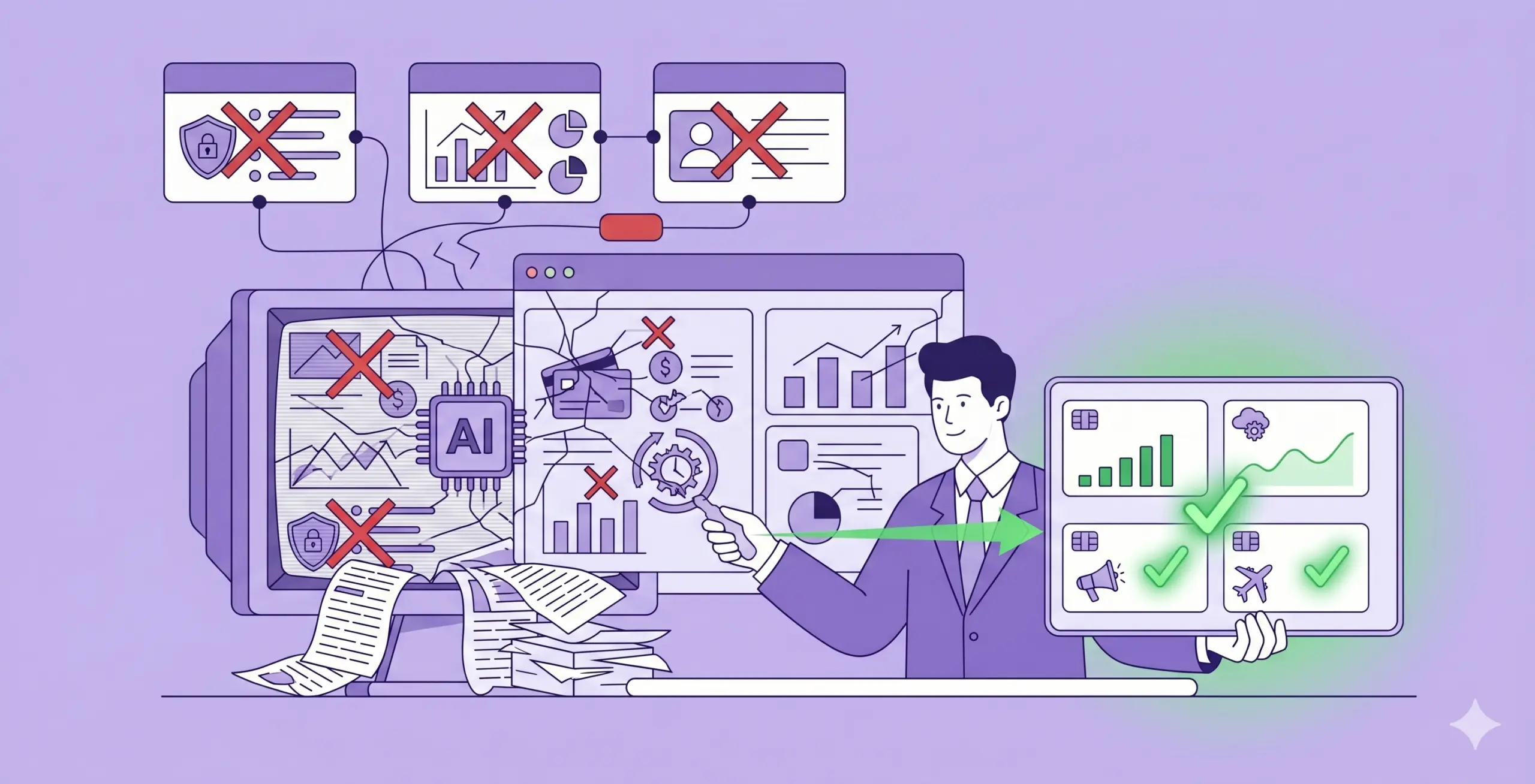
This delay isn't about lazy accounting. It's about the gap between when money leaves and when finance teams can actually see where it went. Corporate cards generate thousands of transactions monthly, each requiring categorization, approval verification, and policy compliance checks. Traditional spend management tools treat this as a batch process - collect data, process monthly, generate reports, react.
AI spend analytics platforms flip this model. Instead of reviewing what happened last month, CFOs get real-time visibility into what's happening right now, with machine learning that catches anomalies, predicts trends, and automates the grunt work that buries finance teams.
Here's what actually matters when evaluating the best AI spend analytics platform for corporate cards in 2026.
Why CFOs Are Moving to AI-Powered Spend Analytics Now
The corporate card landscape changed dramatically in 2024-2025. Remote work normalized distributed spending. SaaS subscriptions multiplied. Teams started using virtual cards for everything from AWS to LinkedIn ads. The result: spending fragmented across hundreds of vendors, often without clear ownership or category.
Manual categorization can't keep up. A 2025 study by Forrester Research found that finance teams at mid-sized companies spend an average of 47 hours per month just categorizing corporate card transactions. That's more than a full-time employee doing nothing but tagging expenses.
AI eliminates this bottleneck. Modern platforms use natural language processing and pattern recognition to auto-categorize transactions with 95%+ accuracy after learning your company's spending patterns for 30 days. They detect duplicate vendors even when they appear under different legal names or billing entities. They flag policy violations in real-time before the transaction settles, not during month-end review. And they predict budget overruns 2-3 weeks before they happen based on spending velocity and historical patterns.
The ROI is measurable. Companies implementing AI spend analytics in 2025 reported finding an average of $127,000 in redundant or wasteful spending in their first year - subscriptions no one was using, duplicate vendor accounts, personal expenses misclassified as business.
What CFOs Actually Need from AI Spend Analytics Platform in 2026
Not all AI platforms are built for finance leaders. Some are glorified dashboards with a chatbot bolted on. Here's what separates a truly effective AI spend analytics platform for CFOs from marketing hype.
Real-Time Visibility, Not Delayed Reporting
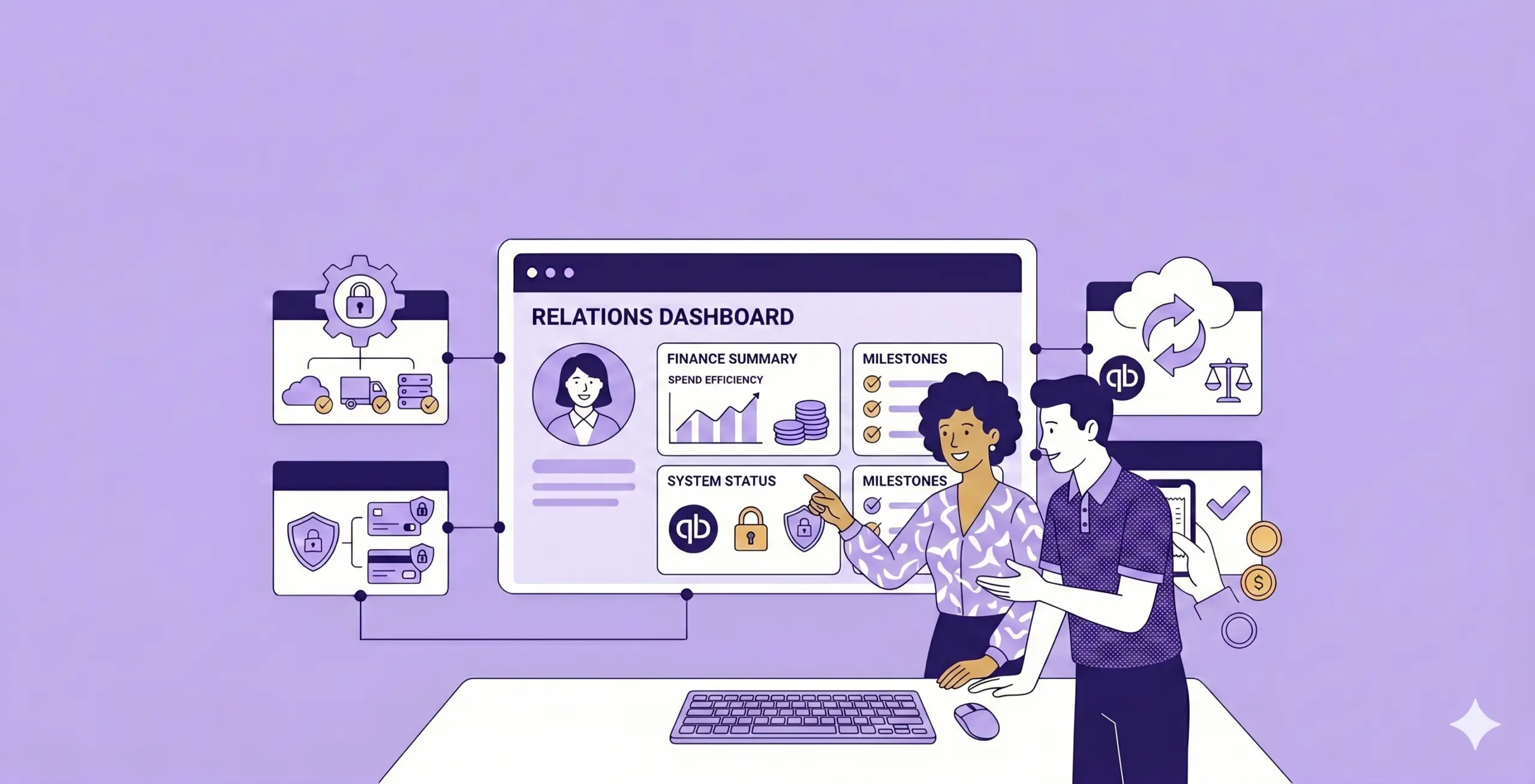
Traditional platforms show you what happened last month. The best AI spend analytics platforms for corporate cards show you what's happening now. Every swipe, every virtual card charge, every subscription renewal appears instantly - categorized, policy-checked, and flagged if anomalous.
This matters when a team accidentally renews an annual $50,000 software license you meant to cancel. Catching it same-day means you can still dispute the charge. Catching it at month-end means eating the cost. Setting spending limits and merchant restrictions at the card level prevents these situations before they happen.
Predictive Insights, Not Just Historical Data
The best AI platforms don't just categorize spending - they forecast it. Machine learning models analyze spending velocity by department and category, seasonal patterns like Q4 marketing spikes and January travel slowdowns, team-specific behaviors such as engineering over-indexing on cloud infrastructure during product launch months, and vendor billing cycles to show which subscriptions renew when.
A strong AI spend analytics platform for CFO teams can tell you on January 15th that marketing will exceed their Q1 budget by $23,000 if current spending continues - giving you time to course-correct instead of explaining the variance in April. This is where efficient budget planning meets predictive technology.
Natural Language Queries That Actually Work
"Show me all software subscriptions over $500 per month that haven't been used in 60 days."
That query should take 5 seconds, not 20 minutes of filtering and exporting. GPT-style interfaces let CFOs and finance teams ask questions in plain English and get instant answers - no SQL knowledge required, no waiting for data teams.
In 2026, this capability is table stakes for any AI spend analytics platform. If you're still clicking through dropdown menus to build reports, you're using last decade's tools.
Automated Anomaly Detection You Can Trust
AI platforms monitor every transaction against your company's normal patterns. When something unusual happens - a vendor charge 3x higher than typical, a card used outside normal geographic patterns, a subscription that shouldn't exist - the platform alerts the right person immediately.
The key is precision. Bad anomaly detection floods you with false positives, and alert fatigue makes teams ignore everything. Good anomaly detection learns what "normal" looks like for your company and only surfaces genuinely suspicious activity. Automated approval workflows ensure these alerts reach the right decision-maker without manual routing.
Multi-Entity Consolidation for Complex Structures
If you operate across multiple entities, geographies, or subsidiaries, your spend analytics platform needs to consolidate everything while maintaining entity-level controls. AI platforms handle this by normalizing currencies and exchange rates automatically, mapping vendor relationships across entities so they recognize that "AWS EMEA" and "Amazon Web Services Inc" are the same vendor, and applying entity-specific policies without manual configuration.
This is critical for companies with M&A activity. When you acquire a company, their corporate card spending should integrate into your analytics within days, not quarters. Financial consolidation for multi-entity businesses becomes seamless when your spend analytics platform handles the complexity.
Evaluating AI Spend Analytics Platforms: A Practical Framework
When comparing the best AI spend analytics platforms for corporate cards, consider these key dimensions and their relative importance.
Implementation and Onboarding
Time to first insight matters more than feature lists. Top platforms deliver value in under 14 days. If a vendor quotes 90-day implementations, that's a red flag. Look for data integration depth - does it connect natively to your ERP, accounting system, and banking partners, or does it rely on CSV uploads? Ask about the learning period. How long before the AI understands your spending patterns? 30 days is standard, while 90+ days suggests weak machine learning.
AI Capabilities
This is where the rubber meets the road. Ask vendors for categorization accuracy benchmarks. Leaders achieve 95%+ accuracy after the initial learning period. Request false positive rates for anomaly detection - if they won't share, that's a bad sign. Test the predictive modeling. Can it forecast spending by department and category? How far ahead can it see: one month versus one quarter versus one year? During demos, test natural language queries yourself. Ask complex questions and see if you get useful answers or canned responses.
AI in finance and procurement requires practical implementation strategies beyond vendor promises.
User Experience
Mobile functionality tells you whether approvals and alerts are mobile-first or whether the mobile app is an afterthought. Dashboard customization should let you build views for different stakeholders - CFOs see high-level trends, department heads see their budgets, accounting sees policy exceptions. Reporting flexibility means you can export data in formats your board and auditors actually need, not just what the vendor thinks is useful.
Integration Ecosystem
ERP and accounting sync should push categorized transactions directly to NetSuite, QuickBooks, Sage, or whatever you use. Banking partnerships mean direct bank feeds that eliminate reconciliation headaches. Workflow integrations let the platform trigger approvals in Slack, send alerts to email, and create tasks in your project management tools.
For companies managing multiple accounting instances, seamless integration across systems prevents data silos and duplicate work.
Vendor Viability
Ask for customer retention rates. High churn suggests problems customers discovered after buying. Product velocity matters too - how often do they ship new features? Quarterly releases suggest active development, while annual updates suggest a stagnant product. Check the support model. Is support outsourced or in-house? What are the response time SLAs, and do they actually meet them?
Real-World Impact: What CFOs Are Actually Achieving
A Series B SaaS company with 200 employees implemented AI spend analytics in Q2 2025. After six months, they reduced month-end close time by 4.5 days by eliminating manual transaction categorization. They identified $89,000 in redundant software subscriptions - 11 different project management tools across teams, 6 unused CRM licenses, duplicate Zoom accounts. They cut budget variance from 18% to 6% through predictive alerts that caught overspending early. And they saved 40+ hours monthly in finance team time previously spent on expense report review and categorization.
A mid-market manufacturing company with $120M revenue found different value. They caught a $34,000 fraudulent transaction within 2 hours through anomaly detection when an employee card was used for personal luxury goods. They improved cash flow forecasting accuracy by 23% by incorporating real-time spending velocity into models. And they reduced policy violations by 67% through real-time alerts that stopped non-compliant purchases before they settled.
The pattern across implementations: the best AI spend analytics platforms for corporate cards don't just make existing processes faster - they enable capabilities that were impossible with manual or rules-based systems. This is the future of finance in the age of automation.
What's New in 2026: Trends Worth Watching
AI-Powered Vendor Negotiations
Emerging platforms now analyze your spending patterns and market benchmarks to recommend vendor negotiation strategies. When a platform tells you "You're paying 23% above market rate for DocuSign licenses based on your usage tier," that turns into actionable savings. Some platforms are even beginning to suggest optimal contract structures and renewal timing based on your usage patterns and market conditions. Strengthening vendor partnerships through better payment practices and data-driven negotiations creates mutual value.
Sustainability Spend Tracking
CFOs are increasingly responsible for ESG reporting, and AI platforms now categorize spending by carbon impact. This helps finance teams track scope 3 emissions and identify greener vendor alternatives. The capability is still emerging, but companies with sustainability commitments are finding it invaluable for board reporting and identifying vendors whose environmental practices align with company values.
Integrated Procurement Workflows
The line between spend analytics and procurement is blurring. Leading platforms now suggest bulk purchase opportunities when they notice that five teams bought the same software separately and could consolidate for a 30% discount. They automate vendor onboarding for frequently used categories, reducing the friction between identifying a need and getting budget approval. Custom request forms and automated workflows make this possible without adding manual overhead.
Deeper Banking Integration
Real-time banking APIs enabled by open banking regulations globally mean AI platforms can now see pending transactions before they settle. This catches policy violations or anomalies within minutes of a card swipe, not days later. The shift from batch processing to true real-time visibility is changing how proactive finance teams can be. Virtual corporate cards for distributed teams leverage these real-time capabilities to maintain control without bottlenecks.
The Bottom Line: What to Do Next
If you're still using traditional spend management tools, you're operating with a 3-week delay in understanding where your money goes. That gap costs you in missed savings opportunities, budget overruns, and finance team time.
The best AI spend analytics platforms for corporate cards in 2026 deliver real-time visibility into every transaction, predictive insights that prevent problems instead of documenting them, automated categorization that frees your team from data entry, natural language queries that make data accessible to everyone, and integration depth that eliminates reconciliation headaches.
Implementation timelines are short - 2-4 weeks for most companies - and ROI is measurable within the first quarter, usually through redundant subscription discovery alone. For startups and growing businesses, choosing corporate cards without personal guarantees paired with AI analytics reduces both financial risk and administrative burden.
Ready to evaluate your current spend visibility? Ask yourself how long it takes to answer "What did we spend on software last quarter?" Consider when you find out a department exceeded their budget - during the month or after. Think about how many hours your team spends categorizing transactions monthly. And honestly assess whether you can forecast Q2 spending with confidence today.
If those questions make you uncomfortable, it's time to look at AI spend analytics platforms built for 2026's complexity. Finance teams are moving from scorekeepers to strategic drivers, and AI-powered spend analytics is the foundation of that transformation.
Frequently Asked Questions About AI Spend Analytics Platforms for CFOs
How long does AI spend analytics implementation take?
Leading platforms deliver initial insights within 14 days. Full AI model training that achieves 95%+ categorization accuracy typically takes 30 days as the system learns your spending patterns. This is much faster than traditional spend management implementations, which often take 90+ days.
What's the typical ROI timeline for AI spend analytics platforms?
Most companies identify cost savings within the first 30 days, usually from redundant subscriptions or policy violations. Process efficiency ROI from time saved on categorization and close is immediate. Full ROI is typically achieved within 3-6 months when you factor in savings, efficiency gains, and improved forecasting accuracy.
Do we need to change our corporate card provider to use AI spend analytics?
No. Top AI spend analytics platforms integrate with all major corporate card providers and banking partners through direct feeds or APIs. You can keep your existing card program and banking relationships while adding AI-powered analytics on top. However, platforms that combine corporate cards with built-in AI analytics eliminate integration complexity entirely.
How accurate is AI categorization compared to manual review?
After the initial learning period, leading platforms achieve 95-97% accuracy - higher than manual categorization, which studies show averages 87-91% accuracy due to human error and inconsistent judgment calls. The AI also gets more accurate over time as it learns your specific patterns and preferences.
What size company benefits most from AI spend analytics?
Companies with 50+ employees and $5M+ in annual corporate card spending see clear ROI. Below that threshold, manual processes may still be manageable. Above 200 employees, AI spend analytics becomes essential rather than optional. The complexity of tracking spending across departments, entities, and categories makes manual processes increasingly untenable. Small businesses should look for platforms designed for their scale and growth trajectory.
Can AI spend analytics platforms handle international operations?
Yes. Modern platforms automatically handle multi-currency transactions, exchange rate fluctuations, and entity-specific policies across geographies. This is critical for companies with international operations or M&A activity. The AI learns to recognize the same vendor across different entities and countries, even when they appear under different legal names or currencies.
What's the difference between traditional spend management and AI spend analytics?
Traditional spend management tools collect and report historical data with manual categorization and rule-based alerts. AI spend analytics platforms use machine learning to automatically categorize transactions, predict future spending patterns, detect anomalies in real-time, and provide natural language query capabilities. The shift is from reactive reporting to proactive financial intelligence.
How do AI spend analytics platforms protect sensitive financial data?
Enterprise-grade platforms use bank-level encryption, SOC 2 Type II certification, role-based access controls, and audit logging. Look for platforms that are compliant with relevant regulations like GDPR, SOX, and industry-specific requirements. Data residency options should be available for companies with geographic data restrictions.
Can AI spend analytics integrate with our existing tech stack?
The best platforms offer native integrations with major ERP systems (NetSuite, SAP, Oracle), accounting software (QuickBooks, Xero, Sage), corporate card providers (American Express, Visa, Mastercard), and productivity tools (Slack, Microsoft Teams). API access allows for custom integrations when needed. Native integrations eliminate middleware and reduce implementation complexity.
Why do traditional bank corporate cards struggle with AI analytics?
Traditional bank corporate cards often have limited API access, delayed transaction feeds, and inconsistent data formats that make real-time AI analytics difficult. Modern fintech platforms with virtual card capabilities are built API-first, enabling the real-time data flow AI requires for accurate predictions and instant categorization.